Managing Wanstead Park
Wanstead Park was purchased as part of Epping Forest in 1880 and has subsequently been listed as a Grade II* Registered Park & Garden; Site of Metropolitan Importance for Nature Conservation (SINC); Archaeological Protection Zone (APZ) Groundwater Protection Zone (GPZ) and forms the majority of the Wanstead Park Conservation Area.
The Grotto
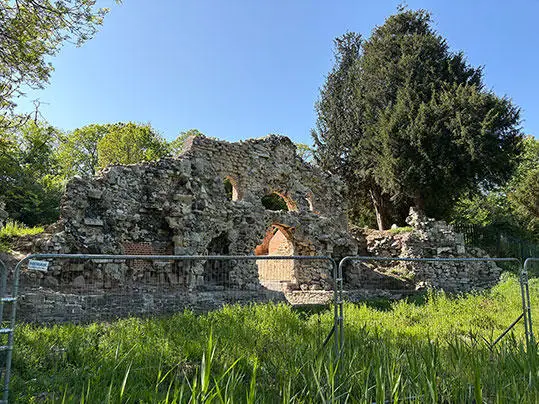
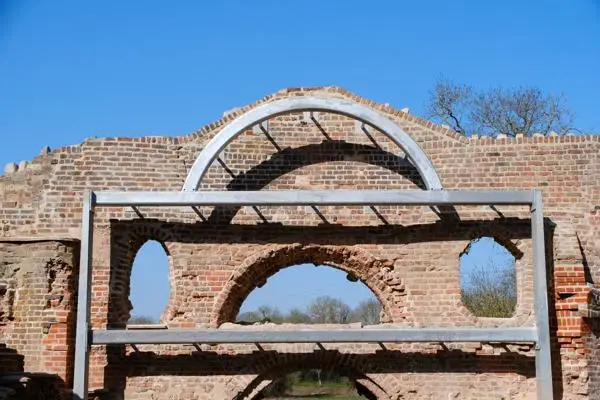
The Grotto, one of the jewels in the crown of Wanstead Park, is a Grade II* listed building. Work to stabilise the structure was completed March 2026.
During Spring / Summer 2026, the site will be assessed by Historic England, and we hope the Grotto will then be removed from the Heritage at Risk Register.
What’s next for the Grotto?
We don’t want to stop here. Our aim is to further develop the area so the community can celebrate and enjoy this beautiful heritage feature.
The next stage will involve applying for funding and exploring possible options for the future of the site. Securing funding on a project this size may take a couple of years. In the meantime, fencing will remain in place and access will be restricted to ensure the safety of park visitors and to protect the Grotto.
If you see anyone inside the compound or on the Grotto structure, please report it by calling 020 8532 1010.
How can I help?
Later this year we will be consulting with the local community.
We want to hear your ideas:
- What would you like to see at the Grotto?
- How should this space be used?
Please keep an eye on our social media channels and this webpage for updates and opportunities to get involved and share your views.
The Waterscape
The Park is London’s greatest surviving designed historic waterscape and the surviving water bodies form the most significant element of the historic landscape. The waterscape comprises the cascade lake system of The Basin, Shoulder of Mutton Pond, Heronry Pond, Perch Pond, The Dell, and the Ornamental Water, with the River Roding forming another significant element and valuable ‘blue ribbon’ along the eastern edge of the Park. Each element of this waterscape is not only an ornamental feature of considerable heritage value but also wildlife habitat important for its natural aspect.
However, this 300-year-old lake cascade system is not working effectively and coupled with long dry summers, the Ornamental Water has completely dried up. There are also other factors to consider:
Housing & Road Development
Water run-off from the surrounding land used to feed into the lake cascade system. The catchment for this run off at one time extended as far Eagle Pond. This water ran through the ‘River Holt’, a ditch created by Adam Holt the gardener to the Earl Tylney. To the east and south of the Park, the Lake House Estate and Aldersbrook Estate where also once part of the originally parkland. These developments have also cut off the natural flow of water into the Park. Wanstead Park was purchased as part of Epping Forest in 1880 and has subsequently been listed as a Grade II* Registered Park & Garden; Site of Metropolitan Importance for Nature Conservation (SINC); Archaeological Protection Zone (APZ) Groundwater Protection Zone (GPZ) and forms the majority of the Wanstead Park Conservation Area.
Heronry Pond is Leaking
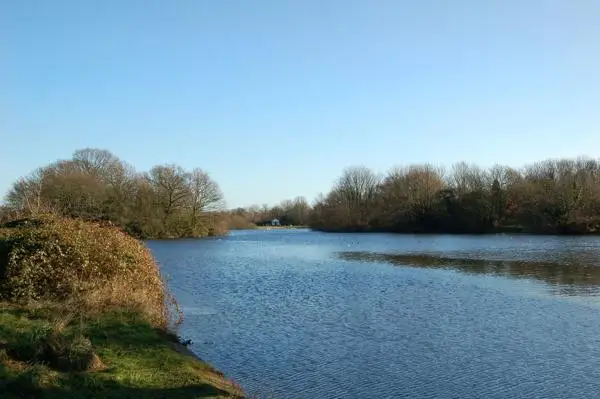
Works were undertaken in the 1900s to reline the Heronry Pond and the result was much the same as we see it today. In the Second World War the northern edge of the Heronry Pond was hit by several high explosive bombs. Then, in 1944, a V1 flying bomb landed right in the middle, creating a large crater. Repairs were carried out but were not successful in stemming leakage. Further attempts at repair were made in the 1950s but unfortunately we still have issues with leaks.
Water is no longer abstracted from the River Roding
Originally, the Lord of the Manor was able to dam the River Roding to direct water into the Ornamental Water. Later, the City of London Corporation, while not able to dam the river, was able to pump from the Roding. This practice happened until 2000. In 2001 a borehole was sunk to pump water from the aquifer into Heronry and Perch Ponds – which continues to this day under licence from the Environment Agency.
How do we manage the water levels today?
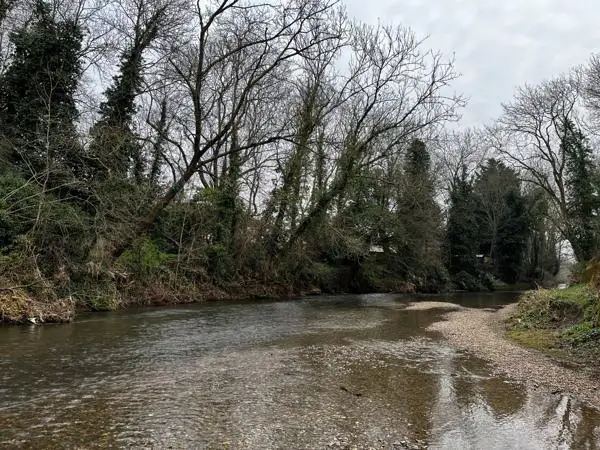
The water levels in the lakes are maintained through pumping water from a borehole. This water can be pumped directly into the Heronry Pond, you may see it coming out of a pipe near to the tea hut, or it can be pumped into the Perch Pond through a pipe under the surface of the water, this cannot be seen.
This used to flow into the Ornamental Water via a small stream through the Dell. Today, this does not happen and we just use the water to keep both the Perch and Heronry Ponds topped up.
An abstraction licence is in place to pump 236,520 m3 of aquifer water from the borehole each year till 2028. Aquifers provide the local community with significant quantities of drinking water, and water for local business needs. They may also support local rivers, lakes and wetlands. It is not sustainable to keep taking water from the aquifer and we need to find a better way to keep our waterscape healthy.
A feasibility study undertaken by McCoy Consulting in March 2023 has mapped a series of twelve potential projects for Wanstead Park. Named the ‘Wanstead Park Waterscape Adaptive Pathway’ the study addresses how to improve the resilience of Wanstead Park to water stress with an aim of maintaining lake levels and reducing dependence on the aquifer supply, which in turn benefits biodiversity and will help the landscape to sequester carbon.
Since then a number of these projects have been completed, changed, improved:
Original proposal: Reedbed creation at the northern edge of the lake using the silt from the Lost Spur creating a new habitat.
2026 Spring Update - Project Completed: Following positive results for the presence of great crested newts in the Heronry Pond, the development works planned for the Lost Spur project could not go ahead.
The focus of that project merged with this one, floating reed beds were installed thanks to funding from Britvic Plc. and Thames 21. This was completed in December 2024.
Original proposal: Winter pumping of water into the Ornamental Waters from the River Roding. This would provide much needed water into the lake, where it would be stored, and then naturally release it back into the River during summer, helping to alleviate low flows in the River. This project is being entirely funded by the City of London Corporation.
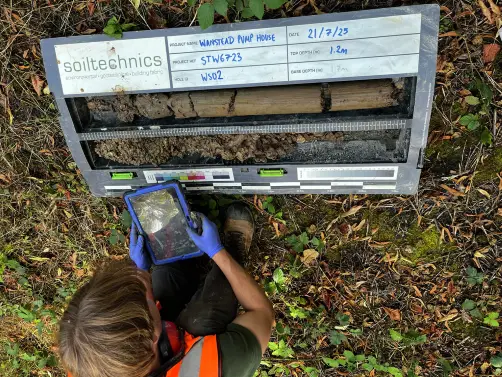
2026 Spring Update - Progressing: The abstraction of water from the River Roding is subject to Environment Agency agreement and is currently awaiting a decision. Over the next few months we will be monitoring the underground conditions of the lakebed to see if and where it is leaking.
Original proposal: In conjunction with the river pump, there was also a historic system of pumps lifting water up the cascade from lake to lake.
The reinstatement of the pumphouse that previously lifted water from Ornamental Water to Perch Pond would include lowering the intake to enable water to be pumped at a greater range of levels. Additionally, the outfall would also be extended to supply to Heronry as well as Perch, enabling the three largest lakes to be supplied.
2026 Spring Update - Progressing: Consultants are currently working on detailed specification and tendering for the new pumps/pump house. A confirmed source of water is required before this project can progress – we are awaiting a decision from the Environment Agency regarding abstraction from the River Roding. This project is being entirely funded by the City Corporation.
Golf course ditch redirection from the River Roding to Ornamental Water.
Original proposal: The existing boundary ditch between the golf course and the Ornamental Water currently discharges water into the River Roding. This could be diverted to allow the water to drain into the Ornamental Water instead.
2026 Spring Update - Under Consideration: This project needs further investigation to see if the addition of herbicides and pesticides to the golf course would have a negative effect on the water entering the Ornamental Water.
Original proposal: Creation of a new tree avenue to provide a shaded route across the Park. It is not on a known historic avenue but it would radiate out from the tree avenue at The Temple.
2026 Spring Update - Under Consideration: This project will be discussed at the next round of consultation.
Original Proposal: This would be a sustainable drainage feature on the park side of the boundary with Wanstead Golf Club. The swale would allow a more efficient collection of water from the golf club’s land drainage, creating habitat and treating water to improve the quality before entering into the Shoulder of Mutton Pond.
2026 Spring Update - Under Consideration: This project will be discussed at the next round of consultation.
Original Proposal: A constructed wetland at the mouth of Reservoir Wood / Shoulder of Mutton pond with an aim to clean the sewer water from the roads before it enters the pond.
2026 Spring Update - Under Consideration: This project will be discussed at the next round of consultation.
Original Proposal: The area of woodland by Park Road / Northumberland Avenue gate. Clearing the young trees that have grown recreating a grassy glade, which was historically a feature of this area. This would allow the water that the trees would have used to run into the Heronry Pond instead.
2026 Spring Update - Under Consideration: Wren Conservation Group carried out practical conservation days throughout autumn and winter 2025 to remove small trees from this area. If you would like to get involved with their conservation projects, please register as a volunteer on their website.
Original Proposal: This would have involved the opening up and clearance of the Lost Spur of the Heronry. Creating reed beds to clean the water from the Northumberland Road surface water sewer outfall. In addition, an area of board walk and platform would have been created.
2026 Spring Update - Project Halted: Following an environmental survey a bat roost was found in the trees and great crested newts were detected in the lake. The additional costs to ensure their protection meant that the project became unfeasible within the allocated funding. The decision was made to merge the focus of this project with the Heronry Reed bed (see above).
Blake Hall Crescent, Sustainable Urban Drainage Scheme (SuDS)
Original Proposal: SuDS are a set environmentally friendly techniques used to manage and control surface water / run off by mimicking natural water systems. SuDS in this area would be a great opportunity to increase water supply to the top of the lake cascade in the Park.
2026 Spring Update - Project Halted: After investigation, it was revealed that all that could be achieved in this area was already taking place.
Original Proposal: Lower the area of the lake in front of the Grotto so it held water during low water levels, reflecting the Grotto and showing it in its intended water setting.
2026 Spring Update - Project Halted: This item was proposed as part of the unsuccessful funding bid to the Mayor of London’s Green and Resilient Spaces Fund. Without this source of funding, and because of the archaeological significance of the stones in the lakebed, this has made it unfeasible to carry the project on.
Original Proposal: Improving land drainage down the Long Walk, maximising the water that could potentially flow into the Ornamental Waters. This would have included disturbing the ground – potentially digging ditches and installing underground pipes.
2026 Spring Update - Project Halted: This area is the most archeologically sensitive part of the Park – it is the oldest part of the gardens so the ground cannot be disturbed. Money has been redirected to other priority areas.
Large Raised Reservoirs
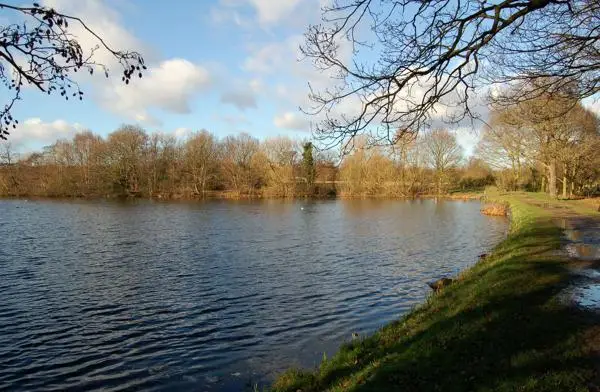
Heronry Pond, Perch Pond, and the Ornamental Water are all classified as Large Raised Reservoirs (LRR). This is because they have the potential to hold 25,000 cubic metres or more of water above ground level. LRR’s are regulated by the Environment Agency under the Flood and Water Management Act 2010. We also classify Shoulder of Mutton Pond as a LRR, as it flows into the Heronry Pond so had the potential to effect the other lakes. The LRR’s need to be inspected regularly to ensure they are in good working order and the banks, which are classed as dams, kept free of vegetation and infrastructure – so no benches can be placed on them and they are mown short during the growing season.
In 2018, the Environment Agency classified the LRR’s within the Park as “High Risk”. The risk is about potential for damage to surrounding properties due to flooding. As a result, The City of London Corporation commissioned a one-year study to ensure that the dams operate safely during major flood events. The City Corporation is now investing £1.15 million to reinforce dams in the Wanstead Park ponds and implement flood prevention measures, this includes grass management to Shoulder of Mutton dam, dam strengthening works to Heronry and Perch and dam re-enforcement works to Ornamental Water. These works need to be carried out so that the lake system can then safely deal with a potential flood incident, which would only occur if all the lakes are full with water.
Floating Reed Bed
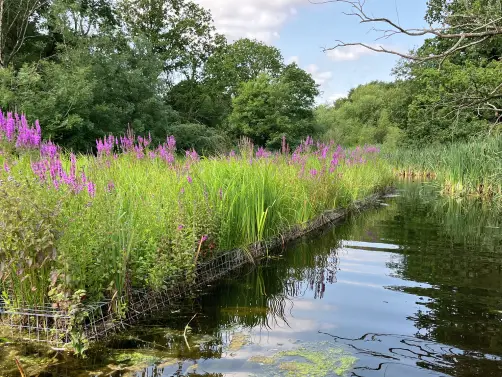
Following the exciting discovery of great crested newts in the Heronry Pond the development works planned for the Lost Spur project could not go ahead as great crested newts are a European protected species. This means the animals and their eggs, breeding sites and resting places are protected by law and we cannot disturb or damage their habitat.
The focus of the project changed to creating floating reed beds instead. These innovative structures consist of plants such as reeds or sedges, which are anchored to floating platforms on the surface of the lake. But what makes them so great:
Natural filtration system - They are invaluable for improving water quality as they can absorb and filter out harmful substances, including nutrients like nitrogen and phosphorus, as well as heavy metals and other contaminants. The roots of the plants trap pollutants, preventing them from being dispersed further into the water. This is particularly useful in urban areas, like the lakes of Wanstead Park, which receive polluted run-off water from the surrounding roads.
Remove excess nutrients - The plants remove excess nutrients often cause to algae blooms on lakes, therefore helping to maintain a healthier aquatic environment.
Enhance biodiversity - Floating reed beds provide a habitat above and below the water for birds, insects, and small aquatic creatures, including great crested newts.
Can adapt to fluctuating water levels - As we know, the water levels in the lakes in Wanstead Park fluctuate throughout the year. The fact that the reed beds float gives them the flexibility to thrive whatever level the water is at.
Sustainable - Floating reed beds are low-maintenance, providing a sustainable and cost-effective solution for managing water quality without the need for complex or expensive infrastructure.
In January 2025, the 160-square-metre floating reedbed was installed in the Heronry Pond. It flourished this year. The reed bed project delivered in partnership with Thames 21 with £80,000 funding from Britvic Plc.
Projects happening this year
July 2026 update.
Ornamental Water lakebed
While we await a decision from the Environment Agency regarding water extraction from the River Roding for the Ornamental Water, we have continued progressing other aspects of the project. Protecting this unique heritage feature remains our priority.
The borehole surveys took place across the lakebed in April, and we are awaiting the report to allow us to better understand the conditions below ground. These surveys will help us assess the lakebed’s capacity to hold water.
This is an early stage in a long-term process. By carefully investigating the condition of the lakebed now, we can better guide future conservation work and make more informed management decisions.
The lakebed has completely dried up, but we would still ask you to stay off it – the banksides and island banks form an important part of this heritage feature, and we would like to avoid damaging them further by visitors clambering in and out.
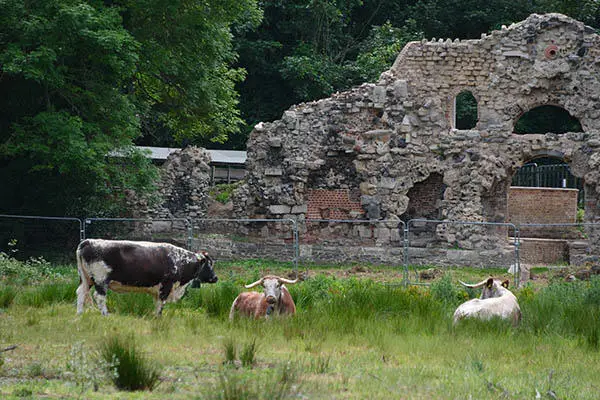
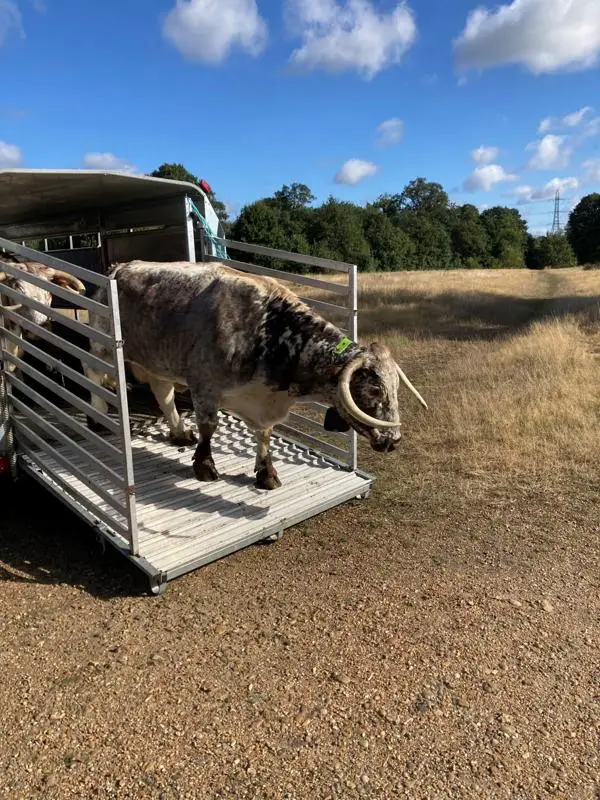
The cows grazed the dry lakebed of Ornamental Water for a few weeks in May, they have been moved onto the Plain, next to Ornamental Water, as they began to try to get onto the islands to graze - which means they were not finding enough to graze in the dry lakebed. We are hoping to move them back into Ornamental Water in a few weeks’ time to graze again. Find out more about our grazing herd.