St Paul's Gyratory Transformation Project
Modernising the City’s streets
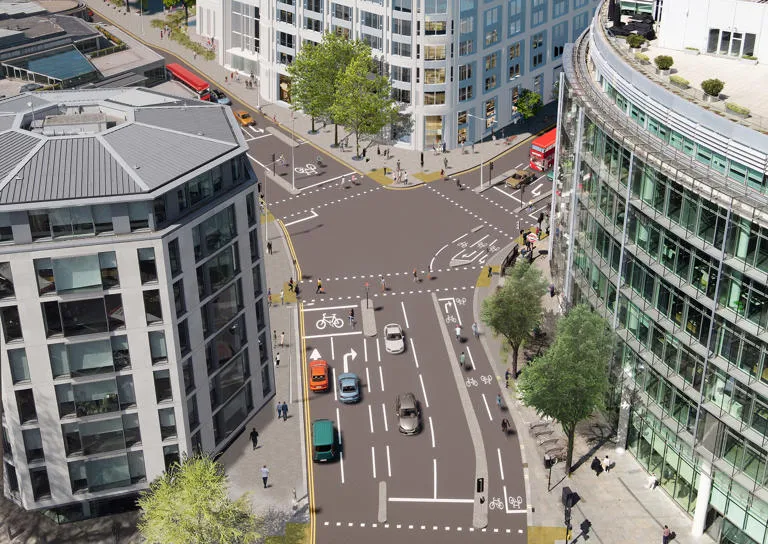
The City of London Corporation are working to transform the St Paul's gyratory. Largely unchanged since the 1970s, our designs will reorganise the traffic-dominated streets to create a new public space, introduce safer walking and cycling routes, whilst retaining access for buses and motor-vehicles. The onsite works commenced on 28 April 2025 and will take place over two years.
Carriageway resurfacing works
Carriageway resurfacing works are taking place on St Martin’s Le Grand, Cheapside, New Change, Newgate Street, King Edward Street, Little Britain and Montague Street from 13 July - 4 September 2026. These are necessary to improve the condition of the carriageway and support the new highway layout prior to the removal of the gyratory and introduction of two-way working.
The works will be carried out by our contractor, FM Conway, during the following hours:
- Monday to Friday: 8am – 6pm
- Saturday and Sunday: 9am – 4pm (26 and 27 July – Angel Street only)
Please note, due to the nature of these works and the need to complete them safely and efficiently, standard City Corporation restrictions on noisy works will not apply. As a result, noisy activities may take place throughout the restricted working hours, including periods that would normally be subject to restrictions. We appreciate that this may cause disturbance and will make every effort to minimise noise where practicable.
The resurfacing will be delivered in ten phases to maintain access where possible and minimise disruption. Please see the resurfacing phasing plan attached which shows when each road will be affected.
During these phases:
- Full road closures will be in place at certain times
- Traffic diversions will be clearly signed
- Access to properties may be restricted during active works
If you have any enquiries or concerns onsite, please contact FM Conway at 01732 600 888.
A new public space
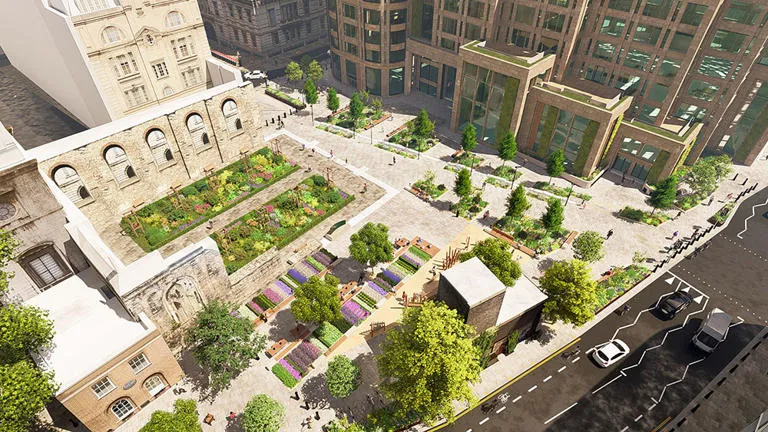
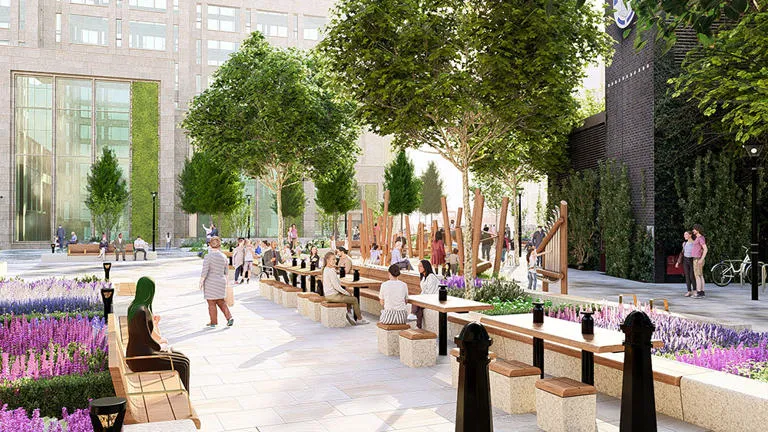
Closing the southern section of King Edward Street to traffic enables us to create a new, 3,500-square-metre public space called Greyfriars Square.
The detailed design and funding for Greyfriars Square were approved on 9 December 2025 by the Streets & Walkways Sub-Committee. View the designs and further information in Agenda item 4 of the committee papers.
A fly-through visualisation of the future Greyfriars Square can be seen on the City of London Corporation YouTube Channel.
Read more information about the cultural significance of the site in the 'History of the area' dropdown below.
New street layouts
View the street designs and consultation feedback in Agenda item 6 of the Streets and Walkways Sub Committee 30 January 2024.
Delivered in phases
Construction works are scheduled to take place in phases. There is likely to be some disruption for people travelling through the area during this time.
- Phase 1 (stages 1-4) will improve streets to the south of the former Museum of London ‘rotunda’ roundabout. Works started in April 2025 and are due to be completed by 2027. There are four stages of the phase 1 works and these can be seen in the phasing plan attached at the bottom of this webpage.
- Phase 2 involves future improvements to the former Museum of London ‘rotunda’ roundabout at the same time as the Museum of London/Bastion House is redeveloped. Planning permission was granted in April 2024 and further details will be provided once available.
Traffic Orders
For details of the traffic orders being consulted on and made for this project, please visit the Traffic Orders webpage.
Who to contact
If you have any enquiries, please contact the St Paul's Gyratory Transformation Project Team.
Christchurch Greyfriars
The current Christchurch Greyfriars Church Garden is on the site of the former Franciscan Friary of Greyfriars Monastery that was established in 1225. It was the second largest church in medieval London and the burial site of many important and royal figures such as Queen Margaret of France, Queen Isabella of France and Elizabeth Barton, the ‘Holy Maid of Kent’. After the Dissolution of the Monasteries, King Henry VIII granted the use of Christchurch Greyfriars to the City of London. After Henry’s death his son, a young King Edward VI, established Christ’s Hospital School for children in the vacant priory rooms, using the former monastic church as a parish church for the school. The first 380 children entered the Christ’s Hospital School in 1552. The school operated here until 1902, when it relocated to Sussex.
The medieval Christchurch Greyfriars buildings, including the Hospital School and its parish church, were destroyed by the Great Fire of London in 1666, and a new church designed by Sir Christopher Wren was completed by 1705. In 1940, incendiary bombs devastated Christchurch Greyfriars, destroying the roof and much of its interior. The remaining shell became a Listed Building after the Second World War, yet the whole of its east wall and part of the southern wall were removed in the early 1970’s to introduce the gyratory road system. In 1989-90, the roadway was re-aligned to allow the footprint of the original church to be re-established. A garden was built, which included box-edged beds representing the original position of the pews, and wooden towers representing the original stone columns of the church.
A communications hub
In 1829, a grand building in St Martin’s LeGrand was the headquarters of the General Post Office for the United Kingdom. As this was the start of the Great North Road (now the A1), mail coaches would head north and travel directly to Edinburgh. It remained the main public post and sorting office until it was demolished in 1911. The Central Telegraph Office (CTO) opened in Newgate Street in 1874. In 1896, Guglielmo Marconi gave the first demonstration of wireless telegraphy from the roof of the building. At its height, the CTO could handle over 175,000 messages a day. In 1900, Post Office Underground Station opened on Newgate Street at its junction with King Edward Street. The station was closed in 1937, re-located further east and renamed St Paul’s. Just a few years later during the Second World War, the disused lift shafts of the old Post Office station secretly housed the electricity grid control for London and Southeast England. The disused shafts are still in place today, sealed underground below the street.