From the Thames to Eternity
From the Thames to Eternity is a never-ending project about the use and re-use of large granite stones from the historic river wall at Victoria Embankment in London. The benches in front of St. Paul’s Cathedral are the most recent chapter in this story, repurposing 21 granite blocks to provide a place to sit and enjoy the view of the most iconic stone building in London.
The idea behind the project is to stimulate discussion about reuse, material lifespan and cultural heritage, at a time when stone can make a significant contribution to a more sustainable built environment. The aim is to retain London’s resources within London, in order to reduce imported materials and to enrich our inhabitation of the city.
Please see the further information on the project below and view the Thames to Eternity Story on the City Corporation's YouTube channel. Please note, the video below has no speech.
The story of the stones

The story of these granite stones starts with the Great Stink in the summer of 1858. Untreated sewage and industrial effluent flowing straight into the Thames was causing disease and a truly unbearable smell.
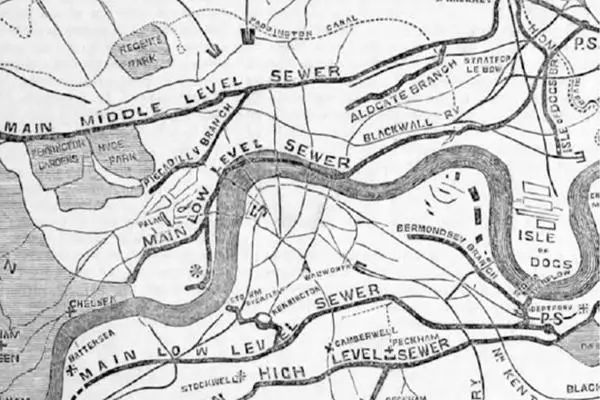
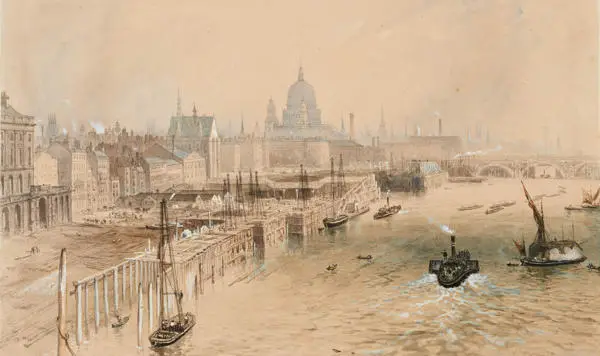
In response, Sir Joseph Bazalgette designed a grand plan for a London sewer system, and as part of the works three stretches of embankment were built on the Thames to accommodate the Low Level Sewer.
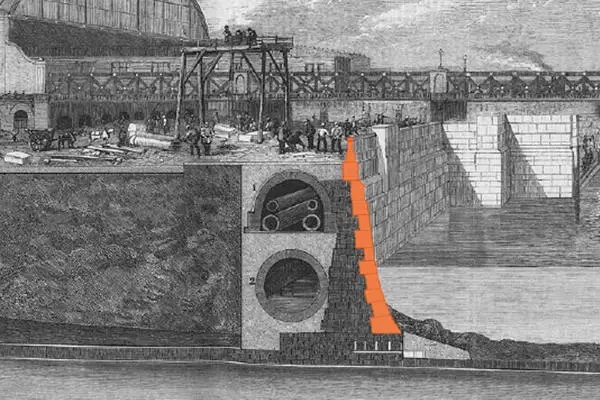
The river wall had to be built with a very strong and durable stone, but London is a city built on clay and gravel - so several thousand large blocks of granite were sourced from quarries across the UK, mainly in Scotland and Cornwall.
Opened by the Prince of Wales in 1870, the Embankment River Wall has been an iconic part of London’s infrastructure for over 150 years, and is now Grade ll listed.
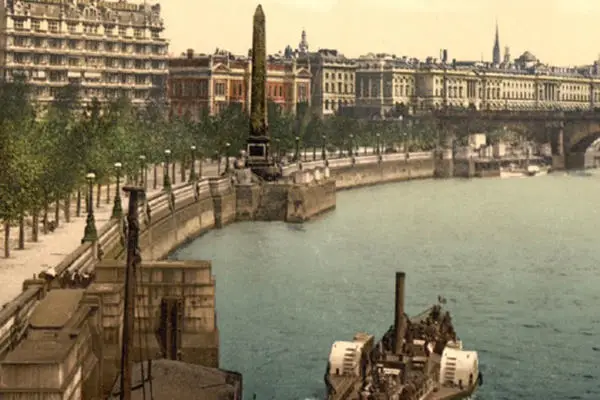
150 years later, with London’s population reaching over eight million people, the sewers were unable to cope. So to help increase capacity, the 4 billion pound Thames Tideway Super Sewer was constructed beneath the Thames. To help the connection between the old and the new sewer, a few sections of river wall were removed.
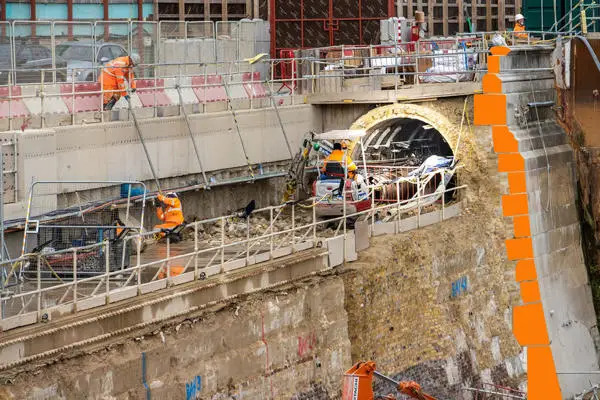
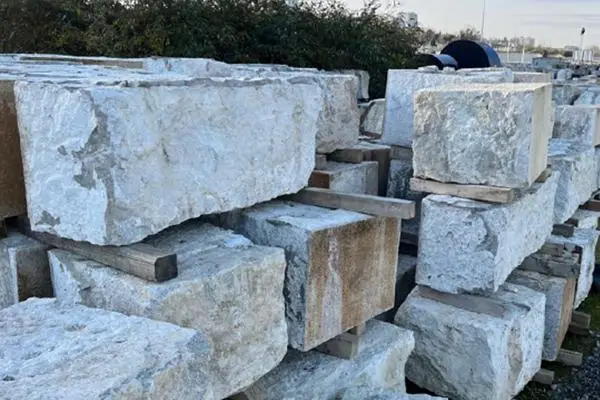
Several hundred stones from Victoria Embankment were salvaged by Tideway, many of which were then gifted by Westminster City Council to the City of London Corporation for reuse.
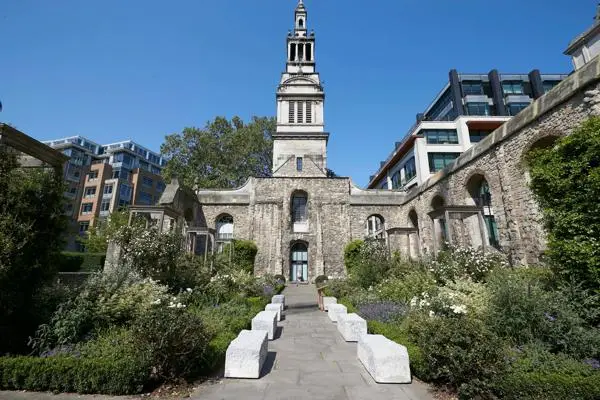
In 2023, while the City of London Corporation looked for projects where the stones could be re-used, 58 of the blocks were installed on a temporary basis to create public seating at seven sites in the City. This ‘meanwhile’ project was so well used that in 2025 the City Corporation commissioned CSK Architects to design a set of permanent granite benches in front of St. Paul’s Cathedral.
From the Thames to Eternity at St. Paul’s Cathedral
The design of the benches is a direct response to three key issues: accessibility, material provenance, and circularity:
The stones have been adapted to create a range of features that broaden accessibility:
- Three different seating heights
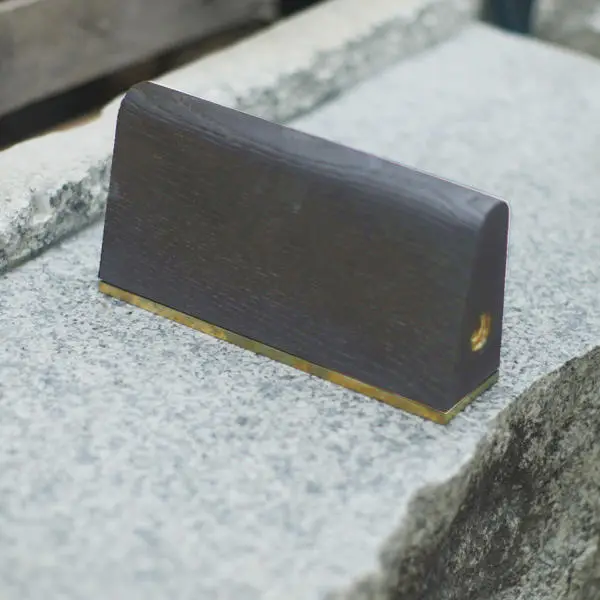
- Wooden arm rests
- Different seating textures - original rugged stone surface or a smooth flat stone
- Places to sit by yourself, with a friend, or in a larger group
The project encourages us to think about the origins and history of construction materials - what landscape do they come from, how are they made, what is their particular character, how have they aged over time etc?
Therefore great care has been taken to display all the traces of the previous lives of the stones - the geological character of the raw stone, the mortar that held them together as an embankment wall, and the tide marks from the Thames.
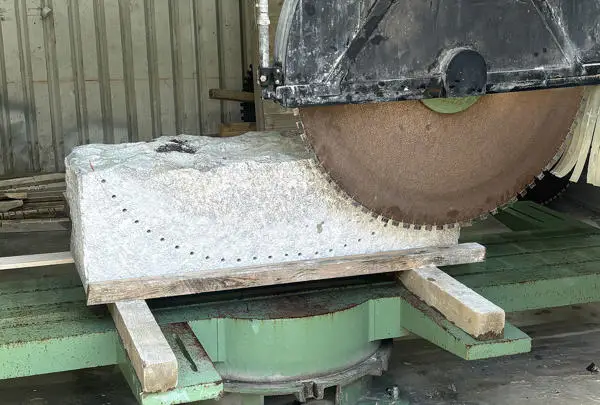
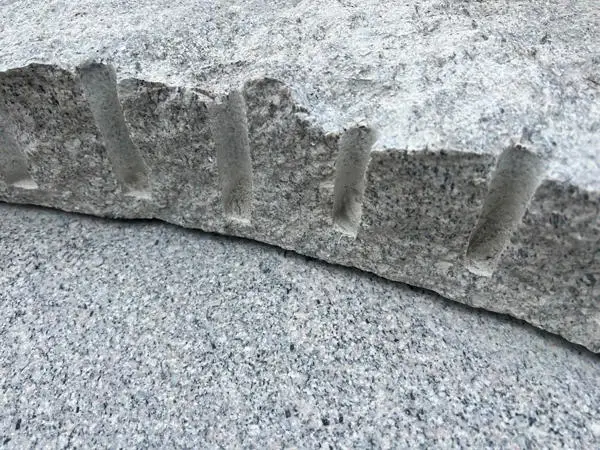
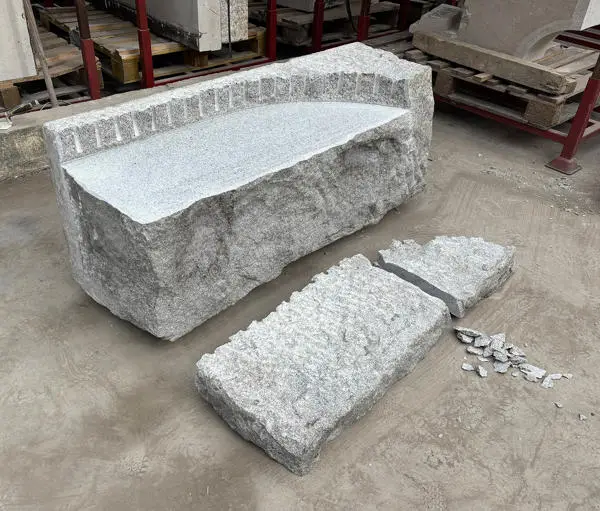
The new life of the stones as public seating is another historical layer, so the stones have been adapted in a way that is a clear and legible record of the tools and processes that have been used. For example, the curve of the circular saw is used to make the shape of the seating. The back of the seats reveals the drill marks and the split face created by the traditional ‘plug and feather’ method to split stone in a controlled way.
All the other parts of the benches are made with materials reclaimed from the London area:
The wooden arm rests have been carved from storm-felled oak in Chiswick Park, and then charred to increase longevity.
The bronze brackets for the armrests as well as all 160 bolted fixings were cast from recycled bronze from London shop signage.
Granite is particularly durable, and these stones could last for thousands of years and contribute to dozens of buildings and structures over this time.
Cutting them into smaller pieces would have made their re-use easier but this would have reduced their potential for a broader range of further uses in the future. So the decision was taken not to cut them into smaller sizes, but to use them in their current form as much as possible – and any stone that was removed from the blocks was collected and re-used.
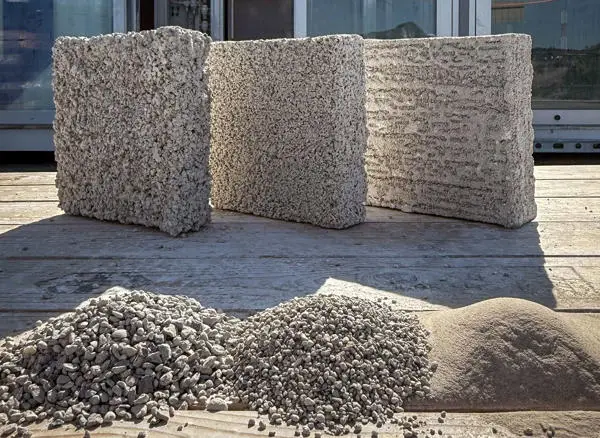
The off-cuts were used to make 42 stone feet for the benches and in order not to waste even the smallest fragment of granite, any stone left over was collected, crushed and 3D-printed to form the plinth for the information board – the beginning of another material life cycle.
More ‘From the Thames to Eternity’
The benches at St. Paul’s Cathedral are one of many projects in London that have re-used the granite blocks reclaimed during Tideway’s work at Victoria Embankment.
In several projects in the City of London such as New Change Garden and Bow Churchyard, and in Greyfriars Square. In other parts of London including “Squaring the Corners” at the Becontree Estate in Dagenham, Peabody regeneration at Thamesmead, around St. Paul’s Fountain at Priory Park, N8, Riverside Gardens, Erith (with surplus blocks from Chelsea Embankment) and St John Street public space.
There are also a number of reclaimed granite blocks still in storage at CED Stone, either for more re-use projects or as a granite repository for future building repairs.
Client
The City of London Corporation - Clarisse Tavin & Marta Woloszczuk
Designers
CSK Architects - Matthew Barnett Howland & Dido Milne
The Bartlett UCL - Oliver Wilton
Main Contractor and all stone fabrication
PAYE Stone - Robert Greer, Tom Harvey & Jon Elliot
Recycled bronze backets & bolts - Maybrey Foundry
Oak Armrests - Fallen & Felled
Designer for 3D printed stone information plinth
OZRUH - Levent Ozruh (with Matthew Barnett Howland)
3D Printing of plinth
Digital Building Technologies, ETH Zurich - Pietro Odaglia
Structural Engineer for plinth
formDP - Danae Polyviou
Printed Graphics
JFK Ltd
Videography
TJF Productions
With thanks
The City of London would also like to thank Thames Tideway and Westminster City Council for donating the stones.